
Generative Engine Optimisation: Your Guide to Dominating AI Search in 2026
🎯 Key Takeaway
Generative engine optimisation (GEO) is the practice of creating and structuring content to ensure it is selected, cited, and prominently featured in AI-generated search answers. It moves beyond traditional SEO by focusing on influencing large language models (LLMs). GEO is critical for visibility in AI-driven search environments like Google’s Search Generative Experience (SGE) and Perplexity. Effective GEO prioritises factual accuracy, clear entity definition, and structured data over simple keyword density. Automating GEO with specialised tools can save UK businesses over £8,000 per month compared to traditional agency retainers. This guide details the strategies you need to transition from outdated SEO and win in the new era of AI search.
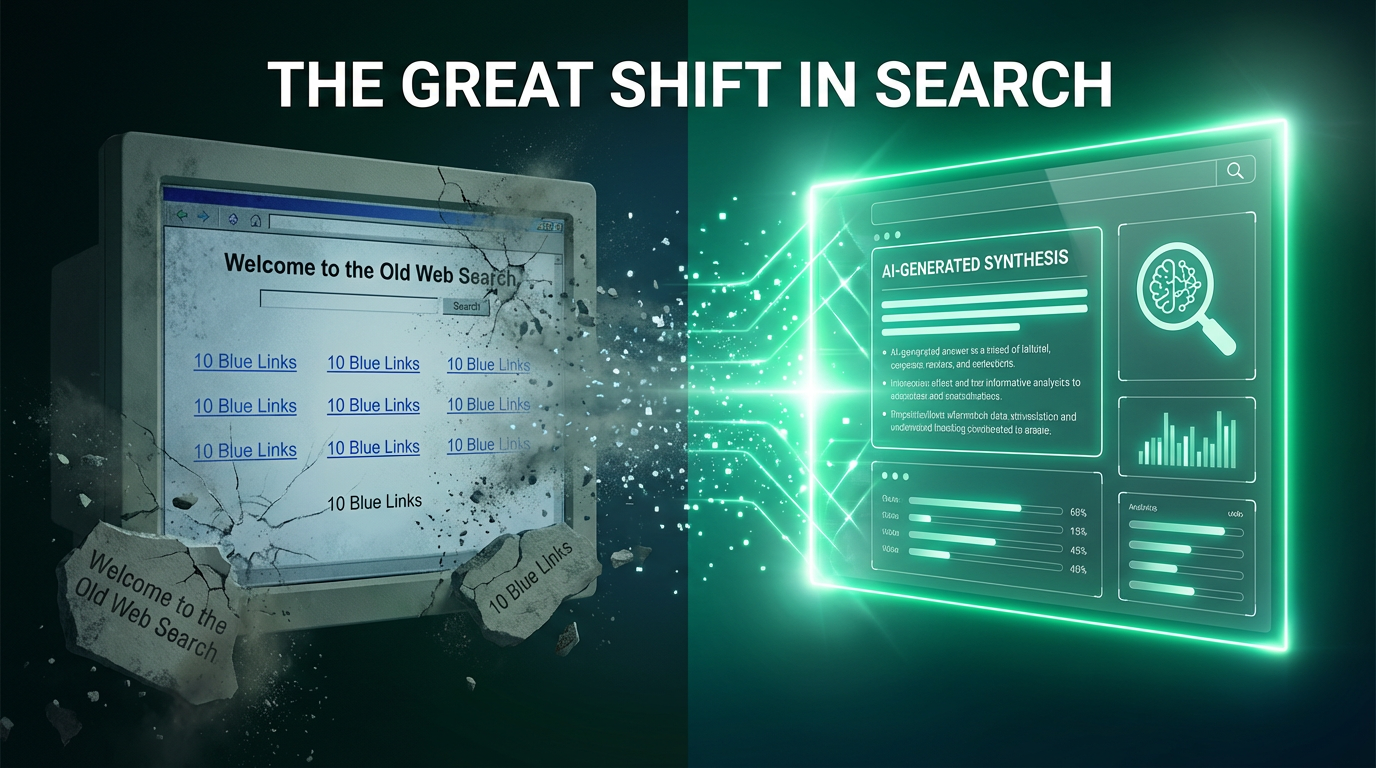
The world of search is undergoing a seismic shift. As of April 2026, the familiar list of ten blue links is being replaced by synthesised, AI-generated answers. For businesses that have built their entire strategy on traditional Search Engine Optimisation (SEO), this is an extinction-level event. For generative engine optimisation, understanding this new landscape isn’t just an advantage; it’s a requirement for survival. This isn’t about tweaking keywords; it’s about fundamentally re-engineering your content to become a trusted source for AI. This guide provides a direct, actionable framework for UK businesses to abandon costly, ineffective agency models and implement an automated generative ai search engine optimisation strategy that delivers measurable results.
Written by: Content Team | Reviewed by: Editorial Team, Industry Specialists
Last updated: 18 April 2026
ℹ️ Transparency Disclosure: This article explores generative engine optimisation based on industry analysis and our platform’s proprietary data. RankBoost AI is an AI-Powered SEO & GEO Platform. We believe in transparency and providing actionable insights. This content is editorially independent and has been fact-checked for accuracy.
The Great Shift: How AI Search Makes Traditional SEO Obsolete
The core function of search has changed from a directory to a direct answer engine. Traditional SEO was a competition to get your link clicked from a list. In contrast, new AI-powered systems like Google’s Search Generative Experience (SGE), a feature that generates summary answers directly on the results page, synthesise information from multiple sources into a single, conversational response. Your goal is no longer to rank #1; it’s to be the source the AI cites.
This shift is not a distant future; it’s happening now. Data from the Stanford University Institute for Human-Centered AI (HAI) (2025) shows that corporate investment in Artificial Intelligence (AI) has nearly doubled in the last two years, with a massive focus on customer-facing generative AI tools. Users are rapidly adopting this new way of finding information because it’s faster and more direct.
What does this mean for you? If your content isn’t structured for AI consumption, it will become invisible. The traffic you fought for with expensive SEO campaigns will evaporate because users will get their answers without ever needing to click on your website. Relying on old-school generative ai search engine optimisation tactics in this new environment is like bringing a paper map to a satellite navigation fight. You’re already lost.
The Core Pillars of a Winning Generative Engine Optimisation Strategy
An effective generative engine optimisation strategy is built on four pillars designed to make your content authoritative and easily digestible for an AI. It’s not about gaming an algorithm; it’s about demonstrating undeniable expertise. These pillars are your blueprint for becoming a primary source for the AI models that now control search visibility.

- Factual Accuracy & Verifiability: AI models are trained to identify and prioritise information that is backed by evidence. This means every significant claim in your content must be supported by citations to authoritative sources. According to Google’s own E-E-A-T guidelines, content must be helpful, reliable, and people-first, a standard that AI now enforces algorithmically (Google Search Central). Your content must be provably true.
- Entity & Semantic SEO: An entity is a well-defined person, place, or concept. You must explicitly define who your business is, what it does, and the concepts central to your industry. This helps a Large Language Model (LLM), an AI system that understands and generates human-like text, to place your brand within its knowledge graph as a subject matter expert.
- Structured Content & Data: LLMs don’t ‘read’ paragraphs the way humans do; they parse data. Converting dense text into structured formats like bulleted lists, numbered steps, and data tables makes your information far easier for an AI to extract and feature in an answer. This structured approach is a core component of successful generative engine optimisation strategies.
- Narrative & Prompt Alignment: Instead of targeting keywords, you must answer the implied question behind a user’s search prompt. This requires creating comprehensive content that addresses a topic from multiple angles, anticipating follow-up questions and providing complete, satisfying answers. A study from the MIT Sloan Management Review found that a lack of scalable processes is a major barrier to AI success, and content that isn’t built to scale will fail (MIT Sloan Management Review).
The Agency Problem: Why Manual Generative Engine Optimisation Fails
The fundamental issue with traditional SEO agencies is their business model, which is completely misaligned with the demands of modern generative engine optimisation. Agencies sell human hours, a model that is too slow, too expensive, and too inconsistent for the scale required to win in AI search. You’re paying a premium for manual processes that can’t compete with automated systems.

In our work with UK Small and Medium-sized Enterprises (SMEs), we see companies paying £5,000 to £15,000 per month for retainers that produce a handful of articles and some backlinks. This manual approach crumbles under the weight of GEO, which requires a high volume of precisely structured, fact-checked, and interlinked content. The cost of an agency performing this work manually is prohibitive. For context, the U.S. Small Business Administration (SBA) advises businesses to spend 7-8% of revenue on marketing; at these agency prices, that budget vanishes with little to show for it (SBA).
The table below breaks down the reality of the cost. The agency model is a relic. Stop paying £8,000/month for SEO that sleeps. We don’t.
| Cost Component | Typical UK SEO Agency (Manual) | Automated GEO Platform (RankBoost AI) | Annual Cost Difference |
|---|---|---|---|
| Monthly Retainer | £8,000 | £1,500 | +£78,000 |
| Content Output | 4-8 articles/month | 30-60+ articles/month | -85% Cost per Article |
| Technical Audits | Monthly/Quarterly | Autonomous daily audit cycle | Continuous vs. Periodic |
| Time to Implement | 2-3 months for first results | 2-4 weeks for pipeline activation | 4x Faster Deployment |
Data based on industry analysis and projections from Statista (2025) market data.
Automating GEO: Tools vs. Services for Unbeatable Efficiency
The solution to the agency problem is automation. However, not all automation is created equal. Many businesses fall into the trap of stitching together various generative engine optimisation tools-one for writing, one for research, another for analytics. This creates a disjointed, inefficient workflow that still requires significant manual oversight.
On the other end of the spectrum are generative engine optimisation services offered by agencies attempting to adapt. The problem is they often just layer new tools onto their old, expensive, labour-based model. You end up paying agency prices for software you could use yourself. It doesn’t solve the core issue of cost and scale.
We believe there is a superior third option: a truly fully automated, end-to-end platform. This is the RankBoost AI approach. Instead of juggling tools or overpaying agencies, our system handles the entire process autonomously. It’s a 5-agent pipeline that runs 24/7, automating everything from content strategy and creation to technical optimisation and rank tracking. It enforces 90+ quality on every article, ensuring it’s structured perfectly for AI consumption, all without any manual work from your team. This is how you achieve superior results at a fraction of the cost.
A Practical Generative Engine Optimisation Checklist for UK Managers
Getting started with generative engine optimisation can feel daunting, but you can take initial steps today to prepare your website for AI search. While a fully automated platform is the ultimate solution, this checklist provides a starting point for any marketing manager looking to make an immediate impact. These actions align with core generative engine optimisation strategies and will begin the process of making your content more AI-friendly.
Content & Factual Accuracy
- Audit Top 10 Pages: Review your most important content. Are all factual claims supported by a linked, authoritative source? If not, add citations.
- Convert Paragraphs: Identify long blocks of text and reformat them into scannable bullet points or numbered lists.
- Add Data Tables: Where you compare features or present data, create a simple markdown table to structure the information clearly.
Entity & Semantic Definition
- Create a Glossary: Develop a page on your site that defines the key terms, concepts, and acronyms specific to your industry.
- Update Your ‘About Us’ Page: Clearly state who you are, what you do, your history, and your expertise. Treat it as a data sheet for AI.
- Implement Schema Markup: Use
OrganizationandPersonschema to explicitly tell search engines about your key business entities. According to Google’s own guidelines, this helps them understand your content (Google Search Central).
Technical & Strategic Alignment
- Analyse AI Search Results: Search for your main keywords and study the structure of the AI-generated answers. What sources are cited? What format do the answers take?
- Answer the Full Question: Revise content to be more comprehensive, anticipating and answering follow-up questions a user might have on a topic.
Frequently Asked Questions
What is generative engine optimisation?
Generative engine optimisation (GEO) is the strategic process of creating and structuring digital content to be selected and featured by AI-driven answer engines. Unlike traditional SEO, which focuses on ranking links, GEO aims to make your information a foundational source for the AI’s synthesised responses. It’s about becoming part of the answer itself.
How is GEO different from traditional SEO?
GEO focuses on influencing AI answers, while traditional SEO focuses on ranking web pages in a list of links. SEO is optimised for clicks from a human user scanning a results page. GEO is optimised for machine readability, prioritising structured data, factual verifiability, and semantic context to become a trusted source for a Large Language Model (LLM).
Why is GEO important for my business now?
GEO is critical because AI-powered search is replacing the traditional list of links with direct, synthesised answers. If your business is not cited as a source within these answers, your online visibility, website traffic, and authority will decline sharply. Early adoption of GEO offers a massive competitive advantage before the space becomes saturated, securing your brand’s voice in the new search paradigm.
What are the most important generative engine optimisation strategies?
The most critical generative engine optimisation strategies are ensuring factual accuracy with citations, defining business entities clearly, and using highly structured content. This involves backing up claims with authoritative sources, creating clear definitions for your brand and industry terms, and formatting information in lists, tables, and short paragraphs. These tactics make your content easy for an AI to parse, trust, and cite.
Can I do GEO myself or do I need generative engine optimisation services?
While you can apply GEO principles manually, it is incredibly time-consuming and difficult to scale effectively. Traditional generative engine optimisation services from agencies are often prohibitively expensive. For most businesses, an automated platform offers an effective balance, providing the scale and precision of GEO without the high cost or manual labour of other options.
What are an effective generative engine optimisation tools?
The most effective approach is not a collection of individual tools but an integrated, end-to-end platform. While various generative engine optimisation tools exist for AI writing, keyword research, or schema markup, a unified platform automates the entire workflow. It combines content creation, technical optimisation, and E-E-A-T signal generation into a single, autonomous system for maximum efficiency and impact.
How do I measure the ROI of GEO?
The Return on Investment (ROI) for GEO is measured through metrics like the number of AI answer citations, branded search volume growth, and qualified leads generated from cited content. You can also measure it by comparing the cost of an automated GEO platform against the high monthly retainer of a traditional SEO agency, highlighting significant operational savings for a greater output.
Is GEO only for large enterprises?
No, GEO is crucial for businesses of all sizes and can be a powerful equaliser for Small and Medium-sized Enterprises (SMEs). By becoming a cited authority in AI answers, smaller businesses can bypass larger competitors who may have massive traditional SEO budgets but are slow to adapt. It’s an opportunity to win on expertise and content quality, not just budget size.
How long does it take to see results from GEO?
Initial results from a well-executed GEO strategy can appear within two to four months, which is typically faster than traditional SEO. The timeline depends on factors like your industry’s competitiveness and the speed of implementation. With an automated platform running 24/7, the process of content creation and optimisation is accelerated, leading to quicker visibility.
Does traditional link building matter for GEO?
High-authority backlinks still act as a signal of trust, but their role has evolved. For GEO, the emphasis shifts more heavily towards the on-page content’s quality, structure, and verifiability. Citations from other authoritative websites within your content are now just as important, as they provide the proof points AI models look for when validating information to include in an answer.
Important Considerations
GEO is an emerging discipline. As large language models evolve, the exact signals they prioritise for generating answers will also change. The strategies outlined here are based on current best practices as of April 2026, but practitioners must remain agile and adapt to ongoing developments from Google, OpenAI, and other AI providers. Research is ongoing, and a definitive, universally accepted framework is still solidifying.
While automated GEO platforms offer significant advantages, some organisations may prefer alternative approaches. These include maintaining a large in-house content and SEO team for full control or using traditional agencies for a high-touch, consultative relationship. Manual prompt engineering and content creation can be effective for niche topics but lack the scalability required for broad market competition.
For complex industries with heavy regulation (e.g., finance, healthcare), a hybrid approach is often best. Use an automated platform for speed and scale, but ensure all content is reviewed by a qualified subject matter expert before publication. If your business operates in a high-stakes environment, consulting with both a GEO specialist and legal counsel is recommended to ensure compliance and accuracy.
Seize the Future of Search Before Your Competitors Do
The shift to AI-driven answers is the most significant change to search in a decade, and effective generative engine optimisation is no longer optional – it is the core of digital survival. By moving beyond outdated SEO tactics and embracing a strategy built on factual accuracy, entity definition, and structured content, your business can secure its place as a trusted authority in the new search landscape. This transition is not just about adapting; it’s about seizing a powerful competitive advantage.
Manually implementing these changes is a monumental task, and traditional agencies are too slow and expensive to keep up. RankBoost AI’s platform automates the entire GEO workflow, running 24/7 on full autopilot and replacing your entire SEO agency. If you are ready to stop wasting your budget and start dominating AI search, it’s time to see how our Analyse. Automate. Dominate. framework delivers the results you were promised.
References
- Google Search Central – Official Guidelines. Google’s guidelines on creating helpful, reliable, people-first content, which form the basis of E-E-A-T.
- Stanford University – Institute for Human-Centered AI (HAI) – Annual Report (2025 data). Provides comprehensive data on corporate AI investment and industry adoption rates.
- U.S. Small Business Administration (SBA) – Government Guidance. Offers foundational advice for small businesses, including marketing budget allocation rules of thumb.
- Statista – Market Research Data (2025). Provides market size data and projections for the global content marketing industry.
- MIT Sloan Management Review – Academic Research. A report detailing the challenges and opportunities of AI adoption in business, highlighting the gap between ambition and execution.
- Semrush – Industry Guide. An analysis of GEO from a leading SEO platform, outlining practical steps for implementation.
- Forbes – Expert Council Article (2025). Insights from the Forbes Agency Council on GEO as the future of search, with actionable tips.
- Reply – Practical Guide. A guide from a digital experience company on the practical application of GEO for content optimisation.
Conclusion
Seize the Future of Search Before Your Competitors Do
In summary, generative engine optimisation is no longer an optional strategy—it is the core of digital survival in an era of AI-driven answers. The shift to synthesised results represents the most significant change to search in a decade. By moving beyond outdated SEO tactics and embracing a strategy built on factual accuracy, entity definition, and structured content, your business can secure its place as a trusted authority in the new search landscape. This transition from traditional generative ai search engine optimisation is not just about adapting; it’s about seizing a powerful competitive advantage.
Manually implementing these changes is a monumental task, and traditional agencies are too slow and expensive to keep up. UP-STRIDE’s Rankbooster platform